
Master How to Cook Fish: Ultimate Guide for Beginners & Pros
The sheer range of cooking methods—from a deep, smoky grill to a light, aromatic steam—means you can tailor any fillet to perfection. Bring the flavour to life with simple additions like fresh citrus and potent spice blends. A simple marinade is all it takes to elevate your meal to gourmet status. While enjoying this culinary freedom, make the responsible choice: always seek out sustainable, responsibly sourced fish to ensure both your meal and the health of our oceans are protected.
The best cooking method for fish depends on the type of fish, its fat content, and the desired flavour or texture. Here are some popular methods and their ideal uses: Grilling: Perfect for firm, meaty fish like salmon, tuna, or swordfish. Grilling imparts a smoky flavour and creates a slightly crispy, caramelized exterior while keeping the inside tender and juicy.
Core Cooking Techniques
- 1. Pan-Sear (Best for fillets with skin like salmon, seabass, and cod):
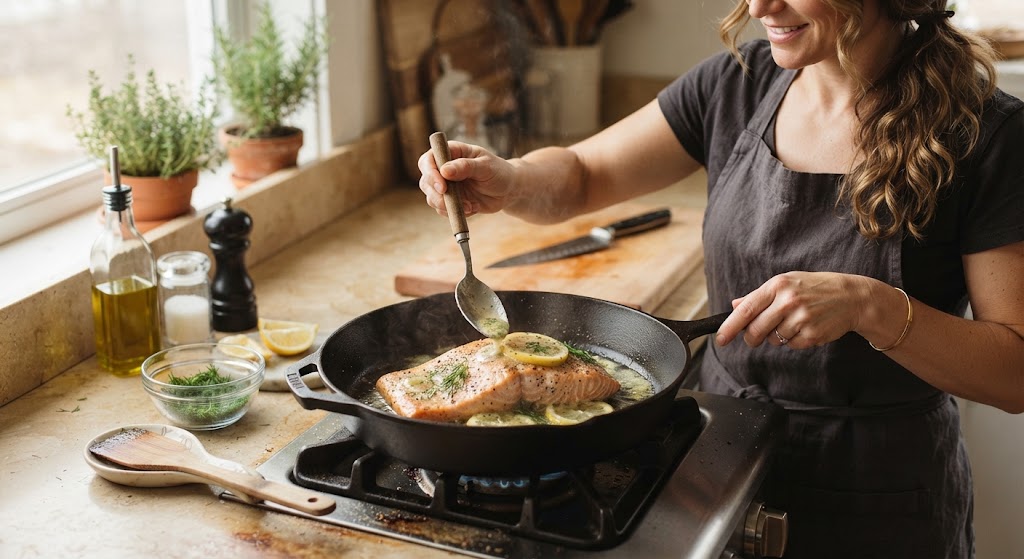
- The Method: Pat the fish completely dry with paper towels (this is the golden rule for crispy skin). Preheat a heavy skillet (cast iron or stainless steel) over medium-high heat with a high-smoke-point oil (like avocado or canola). Place the fish skin-side down and press down gently for the first 10 seconds to prevent curling. Let it sear undisturbed until the skin is golden and crisp (about 70–80% of the cooking time), then flip gently for just 1–2 minutes to finish.
- 2. Baking / Roasting (Best for thick fillets, whole fish, and hands-off cooking):
- The Method: Preheat your oven to 200°C (400°F). Place seasoned fish on a parchment-lined baking sheet or in a lightly oiled baking dish. Roast uncovered. A standard 1-inch thick fillet typically takes 12 to 15 minutes. It’s a foolproof method because the heat surrounds the fish evenly, reducing the risk of falling apart.
- 3. Poaching (Best for delicate white fish like cod, haddock, or trout):
- The Method: Submerge or semi-submerge the fish in a simmering aromatic liquid (court bouillon, coconut milk with lime and lemongrass, or white wine infused with herbs and shallots). Keep the liquid at a gentle, rolling murmur—never a hard boil—otherwise, it will break apart the delicate proteins. Cover and cook gently for 6 to 10 minutes depending on thickness.
- 4. Grilling (Best for firm-fleshed fish like tuna, swordfish, salmon steaks, or whole fish):
- The Method: Clean and preheat your grill to medium-high, and oil the grates thoroughly so the fish doesn't stick. Alternatively, use a grill basket or cedar plank for more delicate pieces. Cook with the lid closed to trap the heat, turning only once halfway through.
Internal Temperature Guidelines
The safest way to tell if fish is done without destroying its texture is using a digital meat thermometer inserted into the thickest part of the flesh. Note: Fish continues to cook slightly from residual heat once removed from the source (carryover cooking).
- Flaky White Fish (Cod, Haddock, Halibut):
- Target internal temp: 60°C to 63°C (140°F to 145°F). Flesh should turn opaque and flake easily with a fork.
- Salmon & Oily Fish:
- Target internal temp: 50°C to 55°C (122°F to 131°F) for medium (moist, tender, and slightly translucent in the center); 60°C (140°F) if you prefer it fully cooked through.
- Firm Steaks (Tuna, Swordfish):
- Target internal temp: 49°C to 54°C (120°F to 130°F) for tuna (seared rare to medium-rare); around 60°C (140°F) for swordfish.
Simple Troubleshooting Guide
- Problem: The fish is sticking badly to the pan or grill.
- Cause: The pan wasn't hot enough, the fish was wet, or the grates weren't oiled.
- Fix: Make sure the pan/oil shimmers before adding the fish. If it sticks, let it cook another minute—fish will naturally release from a hot, well-oiled surface once a crust forms. Never force it.
- Problem: The fish turned out dry, rubbery, or tough.
- Cause: Overcooking. Fish cooks rapidly due to its short muscle fibers and lack of connective tissue.
- Fix: Pull the fish off the heat just before you think it's done; let it rest for 2 minutes. For future batches, reduce cooking time by 1–2 minutes.
- Problem: The fish is falling apart when flipped.
- Cause: Flipping too early, handling too roughly, or using a fragile fish on an ungreased surface.
- Fix: Use a wide, thin metal spatula. Ensure the skin-side is fully crisped before attempting a flip, as the skin acts as a natural structural barrier.
- Problem: The fish has a strong, "fishy" taste or smell.
- Cause: It's past peak freshness, or surface oils are oxidizing.
- Fix: Fresh fish should smell of the ocean/clean water, not ammonia. Soak fresh fillets in a splash of milk or a bath of cold water with a squeeze of fresh lemon juice for 15 minutes before cooking to neutralize strong odors.