Crispy Skins - No Sticking Tip
The Dry-Brine Method for Crispy-Skinned Fish
If you want restaurant-quality crispy fish skin without it sticking to your pan or turning rubbery, skip the wet paper towels and try a dry-brine with fine salt and cornstarch (or baking powder).
- The Technique: Pat your fish fillets completely dry, then sprinkle a light dusting of fine sea salt and a very thin layer of cornstarch (about 1/2 teaspoon per fillet) over the skin side. Place the fish uncovered on a wire rack in the fridge for 30 to 60 minutes before cooking.
- Why It Works: The salt draws out surface moisture and seasons the fish deeply, while the cold fridge air dehydrates the outer layer of the skin (creating what chefs call a pellicle). The tiny bit of cornstarch absorbs any remaining moisture and reacts with the pan heat to instantly gelatinize and crisp up into an ultra-crunchy, golden barrier.
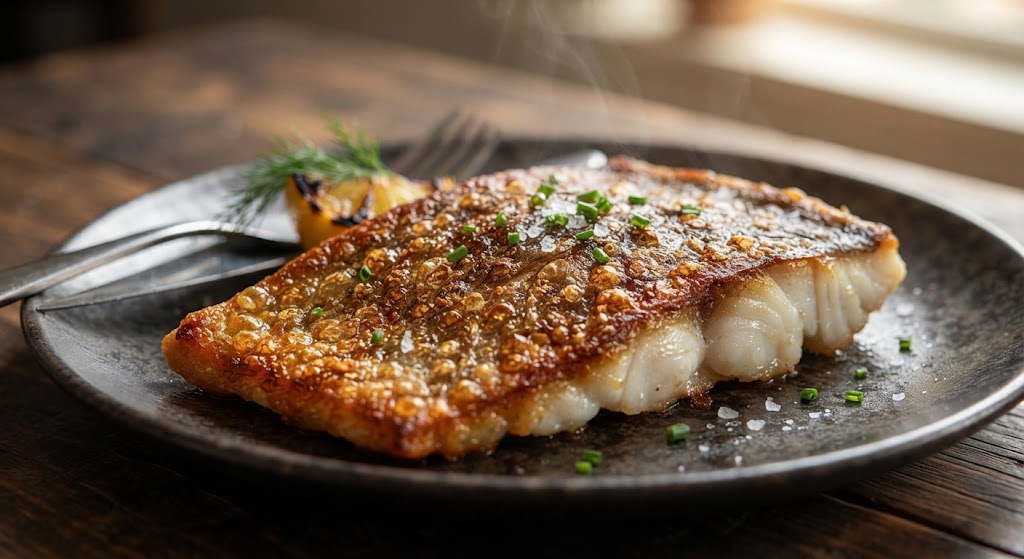
- The Cook: Drop it skin-side down into a hot, preheated pan with a little oil. Because the surface moisture is gone, it won't stick, and you'll get an incredible crunch that rivals deep-frying—all while keeping the flesh juicy and tender.
- The dry-brine method works well on most fish species with skin, but it excels on those that naturally have a tougher, thicker, or fattier skin that you want to get crispy.
- Here’s a breakdown of how it applies:
- Best Candidates: This technique is fantastic for fatty, skin-on fillets like Salmon (as seen in your picture), Sea Bass, Mackerel, Snapper, and Trout. These fish have enough fat and skin structure to achieve that shatteringly crisp texture without drying out.
- Good Candidates: It also works for moderately flaky fish with skin, like Cod or Halibut, though you must be more careful during the flip, as their flesh is more delicate.
- Less Ideal Candidates: This method is not recommended for very thin, delicate-skinned fish (like Flounder or Sole), or fish with very thin, papery skin that won't stand up to high heat for long enough to crisp before the flesh overcooks. For those, a gentler pan-sear or baking is often better.